Showing posts with label Medieval Cookery. Show all posts

Wednesday, 17 July 2024

Household pickle recipes.


This is a HouseHold staple recipe. 

Curiosity of Maragret Fitzwillams (Jennifer 'Pixel' Getty) 


Here's the brine recipe for the grapes:


1 1/2 c red wine vinegar

1 c water

1 c sugar

2 t yellow mustard seeds (I used brown, because it was easier to get that jar)

1 t peppercorns

1 cinnamon stick (Ceylon cinnamon)

1 bay leaf

whole allspice

cloves

dried ginger root


Then in each jar:

1 bay leaf

2 cloves

2 peppercorns

some cinnamon fragments

a whole allspice


Rinse grapes, pack jars. Simmer brine for about 10 minutes then pour into jars. Let cool, refrigerate.


And here's the mushroom brine:


1:1 ratio water and red wine vinegar

Per 1 c of brine:

a garlic clove or two

6 peppercorns

3/4 t sugar

a couple of bay leaves

thyme

2 T kosher salt


I packed additional thyme, bay leaf, and peppercorns in the jars as well. Pack jars with button mushrooms. I used the ones that come in jars, which can get expensive -- if you use fresh, you'll need to simmer them in salted water until they're properly cooked, then pack into jars.

Bring the brine to a boil, simmer briefly, pour into jars. Refrigerate when cool.

[The instructions to refrigerate are in the original recipe, but honestly if you can them properly you shouldn't need to refrigerate.]


Cherry sauce for midnight pork 

(again Pixel)

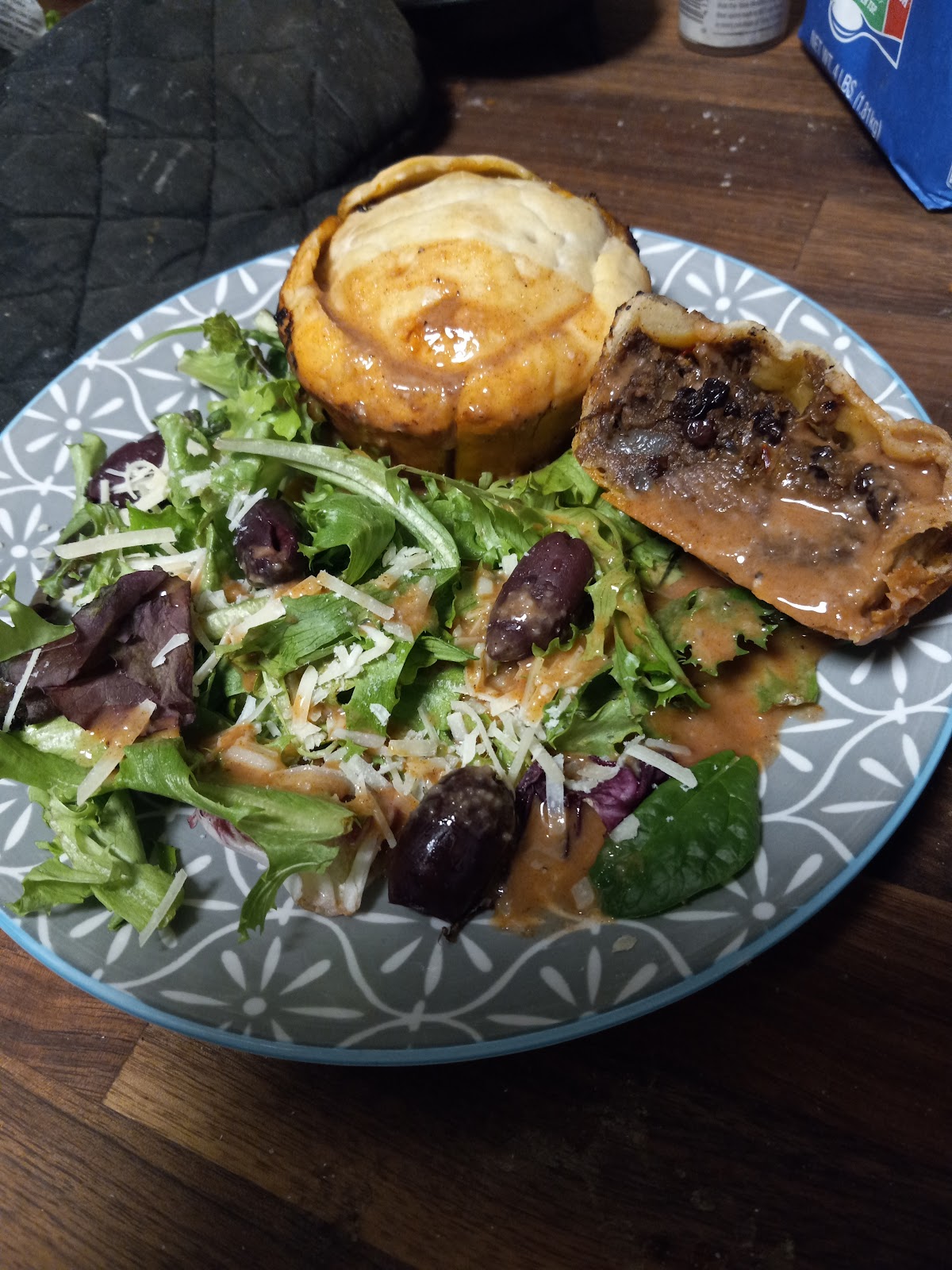
Since multiple people asked about the cherry sauce: it was a very half-assed amalgam of two recipes in Scappi, II.259 and II.277

Summary of II.259: 4lb fresh Roman cherries, cook with 2/3 litre of verjuice, 2 oz fine mostaccioli (a sort of fruitcake), 4 oz breadcrumb, a little salt, 1 lb sugar, 1oz pepper/cloves/cinnamon/nutmeg, put through a strainer and serve.

Summary of II.277: for every pound of cherry juice, 1lb sugar, 1/8 oz whole cinnamon, 1/4 oz ground pepper/cloves/nutmeg. Boil until thick.

What I did:

1 bottle tart cherry juice

1 can panko breadcrumbs

Put some breadcrumbs into a container. Pour in some cherry juice. Mix. Add more of both (about half of the panko and 1/3 of the cherry juice, total). Cover and put in fridge overnight. Take out, realize that you should have put in more cherry juice. Mash it all through a strainer. Add the rest of the cherry juice, ground cinnamon, nutmeg, pepper, and some whole cloves because the spice grinder is being difficult. Heat over a low flame, stirring periodically, until it gets thick. Taste. Add a lot of sugar. Taste again. Add more sugar. Taste again. Decide that will do. Decant into a container and put in the fridge.

I'll probably have to do one that is a little more true to Scappi's spice proportions, just to see what the difference is.

Tuesday, 16 July 2024

WW XXIX Feast

It has started to become a tradition that I take over the household kitchen and serve a traditional style feast. 


But of course I was too busy cooking and serving to take pictures other than these! 

This year the focus was less on following period recipes to the letter, and more about using period seasonal foods, tweaking previous recipes, and trying my hand at over the fire cooking. Because more of it was cooked on site, it was simplified from the previous year. 


The Menu 

First Remove-
 Fresh fruit- apricots, raspberries, dates.
Bread rolls- brown wheat bread and white rye
Garlic and herb butter 
White wine

Second Remove-
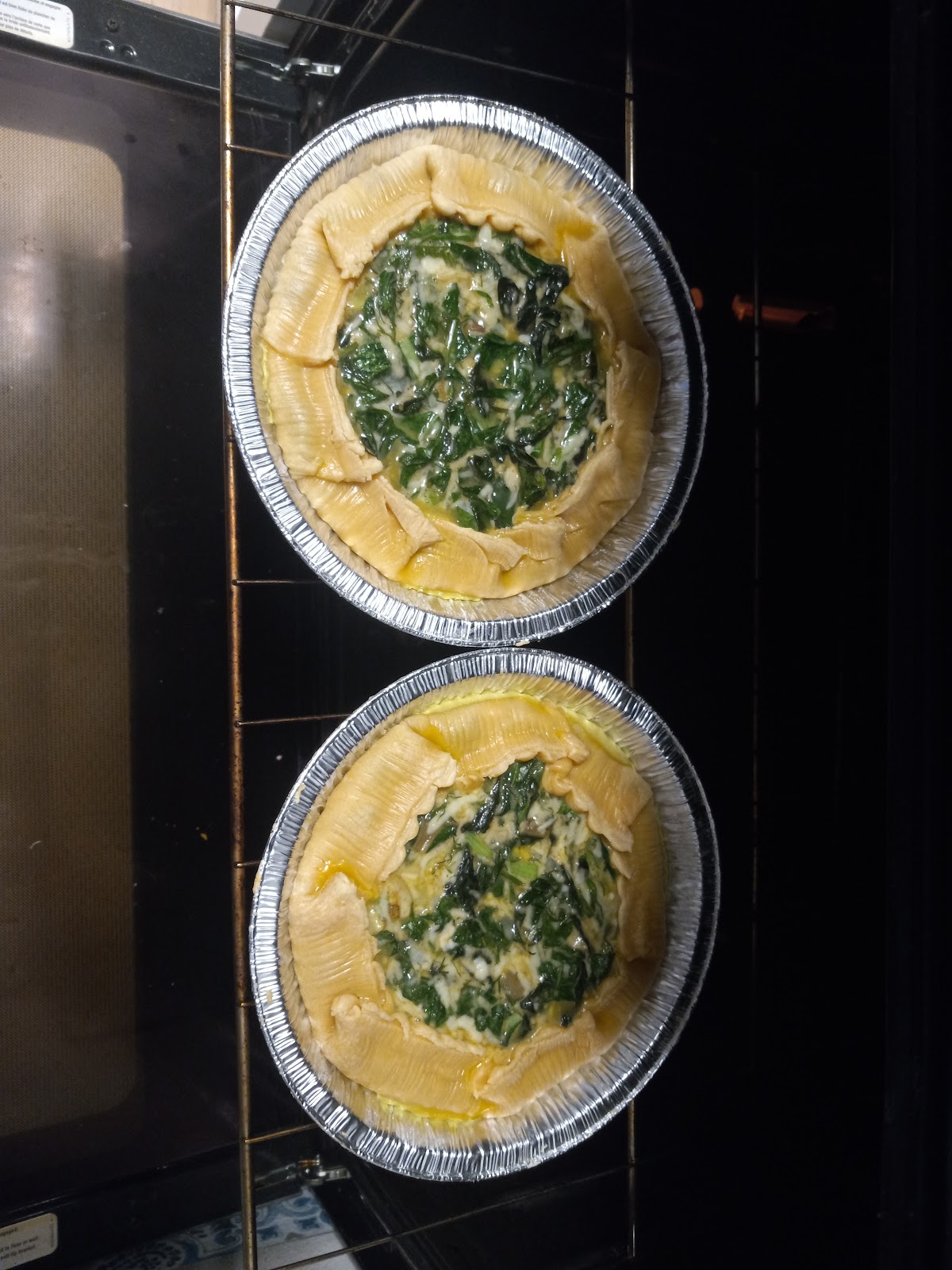
A savoury vegetable egg tarte

Third Remove-
Blancmange 

Fourth Remove-
A Beef Roast with a Root Vegetable Stew
Red wine 

Fifth Remove-
Cheese platter with crackers

Sixth Remove-
Cherry Rose Ricotta Torte
Digestive


The Recipes 

First Remove was purchased except for the butter. 
The fruits are seasonal except for the dates, and all would be accessible in period. 

Bread was a staple, and while white bread would have been considered more appropriate for a high table, I choose whole grain breads that better align with my diet. 

The cheeses where also purchased, Smoked Gouda, Brie, and a goat cheese were chosen and served with store bought whole grain crackers. Both Brie and Gouda have history dating back to the middle ages, and soft fresh cheeses would have been common. 


Garlic and Herb butter- while herbs butters are period, this is a personal recipe frequently used at home and I cannot vouch for it's historical accuracy. 

Take 1/2 stick butter, melted or very soft, add 1 tablespoon olive oil, 1/2 teaspoon garlic powder, and 1/2 teaspoon Italian seasoning or Herbs de Provence. Let chill in the fridge for an hour and remix it so the Herbs are evenly distributed.  


A Savoury Vegetable Egg Tarte- this is modified from a period spinach tarte recipe. I substituted a variety of other leafy vegetables that would be easily available this time of year in period due to a spinach allergy, and used more eggs to fill my crusts. 

Preheat oven to 350°. Chop leeks, dill, fennel, green onions, garlic and chard. Mix together and place in a deep dish pie crust. Scramble 10 extra large eggs, mix in 1 cup of mozzarella cheese, and slowly pour evenly over the vegetables in the pie crust. Tap the pie pan a few times to make sure the egg mixture settles. The cheese will remain on top. 
Cook in the oven with a flat sheet under the pie pan until the center of the tarte is no wiggles and the edges are starting to brown. About 45 min to an hour.  This was made ahead, refrigerated, and served cool. 


Blancmange- This recipe I've made fairly frequently. I tend to add more ginger in addition to nutmeg, allspice, and sliced almonds to this recipe. I've had the best success with arborio rice.  

My version 
2.5 lbs chicken breast meat, cut into 1/2 cubes, toss in a 5 quart sauce pan with some olive oil and saute on low until no pink is visible.  Add 4 cups water, 4 cups arborio rice, and enough unsweetened plain almond milk to cover the rice by an inch. Add 1/2 cup sugar, 1/2 cup sliced almonds, then ginger, nutmeg and allspice to taste. Simmer on the lowest setting, adding more almond milk as needed, (About 4 cups total) I cooked this until it was thick and the rice was almost done. When cooled, I froze it until the day of feast. It was then thawed, placed it in my 5 quart cast iron pot with 1 cup fresh almond milk and allowed to heat up and finish cooking on the highest hook over my fire, stirring frequently (whenever I turned my meat or spit). It was served hot. 


A Beef Roast with Root Vegetable Stew- This was a combination of two different roast recipes.  Found here and here

My version- 
Take 3 large sirloin roasts, in a 10 quart cast iron pot, marinate them in 4 cups red spiced wine (Cabernet, ginger, cloves, allspice, sanders, grains of paradise). Tie the roasts together to form one large roast, return to marinade, add 2 cups water and a teaspoon of beef broth powder. Place the cast iron in medium heat hook over the fire. Let the roast simmer for an hour turning every 15 minutes for even cooking. 

Meanwhile chop parsnips, carrots, and turnips. 

Take the roast out of the marinade (set aside for the stew) and mount it on the spit. Position the spit so it's just above the flames. And do a quarter rotation every 5 min, for about an hour and a half.  Once cooked let rest 10-15 minutes covered, remove the strings, and slice to serve. 

Once the roast is mounted, Take the chopped vegetables and 1 cup dried currants, throw them into the marinade, I probably added another cup of wine to make sure they were covered. I then let them simmer in a medium heat zone until the roast was done. Move to low heat, and while the roast is cooling, thicken the stew. I chose to thicken by melting a 1/2 stick of butter in the stew, and stirring in a 1/2 cup flour. * 

*The period method would have been to strain it with bread crumbs, but I've never had luck with that.  

Served hot

Cherry Rose Ricotta Torte- I followed this recipe, except instead of Rose petals and rose water I used Rose syrup directly into the filling and I left it open faced as is common with custard based pies. I made ahead, and served cool. 

Monday, 24 June 2024

A Medieval Grocery

Every year at WW I have a tradition of taking over the kitchen for a night and creating a mediaeval style feast, this year of course is no different. 

My persona is late 14th century French, so I tend to focus on French food culture of the time, and find recipes that are French, English or northern Italian from the 13th-15th centuries.


Recipes of the time were written down for the people who could actually read, so they are a reflection of the privileged, and not the layperson. Most people would have learned to cook by tutelage and intuitively knowing what combinations worked together to create dishes. Because vegetables were such a common everyday staple that most any person could prepare, vegetable recipes were not often included in these recipes, or would simply be called wortes or pot herbs. Here is an excellent article explaining this. Here is an excellent article explaining this.


Le Ménagier de Paris, writes many things for his young wife, indicating they have enough education to read and can clearly afford some of the luxuries of city life. This text indicates that there was a kitchen garden along with many vegetables to be purchased at the market. Showing even the bourgeoisie would have had a diet consisting heavily of vegetables.   


Humoral theory also plays a key role here, most vegetables coming from the ground would be considered dry, hence needing moisture added. Adding oil or sauce to raw vegetables would have been a way to balance the humours of raw vegetables, in addition to boiling or frying. We have enough recipes of various salats surviving to indicate that simple salads dressed with oil, herbs, or sauces were actually quite common, even for the noble table. 


Most medieval people would have had ale, bread, cheese, eggs, and some form of potage as daily staples. Having enough meat, time, and facilities for many separate stand alone courses was a huge status symbol, Grand feasts had a prescribed order of courses, Start with fresh fruits, a lighter vegetable course- salads, savory tarts, a light meat course- fish, chicken, a heavy meat course- beef, venison, pork, followed by cheese course with a digestive, and finally desert. Many of these dishes would be seasoned with expensive imported spices. 


However if we look at the recipes that do exist, along with vegetables available in the era we can come up with a large list of common foods that were used. 


Seasonal produce-

Asparagus

Artichokes

Carrots (white varieties, orange color is post period)

Parsnips

Turnips

Rutabaga

Radish 

Beets (leaves mostly, roots were developed post period, early varieties white or yellow)

Shard/Spinach/lettuce/greens

Purslane

Dill

Fennel

Cress 

Celeriac

Cabbage

Brussels sprouts 

Cucumbers 

Leeks 

*Onions

*Garlic

Shallots

Scallions 

Ramps

Mushrooms

Truffles 

Capers

Olives

Grape leaves

Jute leaves (In the Arabic dispora)

Okra (in the Arabic dispora)

Beans- Fava, Chickpeas, Haricot, Vetch

Peas 

Marrows- summer squash, zucchini 

Gourds/pumpkins (not quite the same varieties as new world ones) 

Rhubarb 

Wild edible greens and seeds

*Garlic and Onions were considered poor man’s food, and several accounts of the nobility recounted how they were a necessary evil. 


Citrus fruits- Oranges, lemons

Berries

Apples 

Pears (cooked)

Plums (smaller tart varieties)

Cherries (tart varieties)

Strawberries 

Mulberries

Persimmons

Quince

Figs

Dates 

Grapes

Currants

Melons

Wild fruits


Herbs, fresh or dried- Thyme, basil, lemon balm, mint, rosemary, marjoram, parsley, sage, dill, fennel, tarragon, rue, mustard, sorrel, lovage, chives, hyssop, savory.


Floral seasonings- Rose, lavender, violet, primrose. 


Spices- Mustard seed, nutmeg, ginger, cloves, cinnamon, mace, long pepper, saffron, Gangrel, grains of paradise, black pepper, anise, sanders, coriander, cardamom. (often imported) Spice mixes were common- powder fort, powder fine, powder douce.


Meats- 

Chicken

Goose

Duck

Pheasant

Quail/grouse

Pork

Boar 

Lamb

Goat (kid)

Beef

Swan 

Venison 


While most of the above meat was not a daily food source for peasants, if they farmed or hunted their lord’s land (with permission!) they would generally get a portion of their efforts after giving a percentage to the lord. City dwelling presents would have to make do with whatever they could scavenge or afford at market. Other common peasant protein sources could be- poor cuts of meat, sausages, hedgehogs, rabbits, eels, fish, snails, frogs, eggs, green cheeses, beans, peas, in addition to whole grain breads.  


Fish, mussels, eels, crab, clams, scallops- these weren’t considered meats, and could be eaten on holy days such as lent. Salmon and trout being common. 


Pantry staples-

Honey, vinegar, verjuice*, olive oil, lard.

*A juice made from unripe grapes- sweet yet acidic (Sub grape juice mixed with wine vinegar)


Walnuts 

Almonds (almond milk, Mazapan)

Hazelnuts 

Chestnuts

Pinenuts 


Dairy- Fresh milk, Cream, Butter, whey, cheeses.  


Eggs-from all forms of poultry 


Wheat and rye flour- *breads, crackers, pastry crusts, pasta 

Meslin 

Oats for porridge 

Barley for Ale and stews (Northern)

Rice- (Southern- Italy or Spain unless imported)

*Traditional yeast leavened bread was most often purchased directly as they were highly regulated if you lived in town, or one would bring a loaf to a local bakery to be baked since most folks didn’t have a bread oven in their homes. The nobility often would purchase refined wheat breads, whereas peasantry would have more rustic whole grain breads.


Preserved foods-

Various sausages/jerky

Pastry coffins- meats sealed in a salt crust with gelatin gravy

Salted fish and meats

Cheeses

Salt and vinegar pickled vegetables

Jams/jellies/fruit leathers

Ale/wine/cider

Dried beans and peas


Cookbooks to investigate-

Le Viandier de Taillevent


Le Ménagier de Paris


The Forme of Cury- a roll of ancient English Cookery


The Art of Cookery in the Middle Ages, Terence Scully


Cooking in Europe 1250-1650, Ken Albala, Lisa Cooperman


The Medieval Cookbook, Maggie Black


A Medieval Kitchen: A social History with Recipes, Hannele Klemettila 


Medieval Cuisine, Food Fare Culinary Collection, Shenanchie O’Toole


21 French Medieval Cookery Recipes + 10 Unknown Facts About Medieval France, Bethany Willson


A Boke of Gode Cookery http://www.godecookery.com/ 


Medieval Cookery https://medievalcookery.com/index.html 


Medieval Recipes https://www.medieval-recipes.com/ 


Wednesday, 4 October 2023

Pie Shenanigans!


Each WW I try to take on dinner for the household, and I was looking for an idea. Well, On the way to Kingdom A&S there was a pit stop at Norske Nook for pie, and it dawned on me that given mediaeval food preservation methods, that a mediaeval camp would consist of a large amount of foods preserved in a crust. In addition, my household brother and I are well known for shenanigans, and this played right into one of our inside jokes.

And so pie shenanigans commenced! 


Mediaeval feast days would have been a long drawn out affair, with several courses, and entertainments presented between the removals. I styled my courses after french traditions, which varies slightly from the mediaeval pattern, but I didn’t have the bandwidth to study humoral theory in the midst of everything else.  These pies also don’t subscribe to any one time or place, they were chosen for availability of ingredients, and frankly my personal whim.


All the pies and sauces were made in the week before the event and then kept cold or frozen, for modern food safety precautions, and thawed the day of the feast. Due to time and energy involved, I used several premade pie crusts, but used period recipes for the meat crusts. The hand pies were edible coffins made in oversized muffin tins. I used a cookie cutter to distinguish the pies from each other, and provide venting. In period any venting would have been sealed with fat while hot for preservation.


The plan was for 12 people give or take, and so everything was split between 2 tables, each table getting its own pie.


Course 1- appetisers

Breads, various cheeses, butter, honey butter, garlic butter, and tapenade

Water, hydromel and white wine on the table. 


Course 2- savoury pies 

(2) spinach* tarts (our laurel is allergic to spinach so adjusted the quantity of the greens to eliminate the spinach.)

https://medievalcookery.com/recipes/display.html?make1001

(2) Mushroom tarts- Looking back, the mushroom pie had a bit of texture issues, and would have been better served fresh.  

http://greneboke.com/recipes/mushroomtart.html 

(2) Parsnip pie- I added honey as the parsnips were cooking.

https://medievalcookery.com/recipes/display.html?pars1001 


Course 3- meat pies

(2) Salmon pies - I used honey, mustard and rosemary for seasoning, shaped it like a fish, and plated it on a bed of salad. 

https://medievalcookery.com/recipes/display.html?salm1001 

(15) Chicken and pear hand pies

http://www.theoldfoodie.com/2014/03/how-to-fill-your-coffin.html 

http://www.theoldfoodie.com/2014/03/how-to-raise-edible-coffin-1594.html

(15) Venison date and currant hand pies- I substituted Venison for veal in the recipe

https://toriavey.com/shakespearean-cooking-funeral-baked-meats/


Dipping sauces- 

Cameline, http://www.godecookery.com/goderec/grec13.htm

Aioli, http://www.godecookery.com/friends/frec127.html

Mustard http://www.godecookery.com/begrec/begrec46.htm


Red wine on the table


Course 4- sweet pies

(1) Cherry rose torte- I deviated from the recipe to make it open faced, my child liked it so much they stole one, and it has become a household recipe. 

https://medievalcookery.com/recipes/display.html?cher1002 

(2) Pear Tart- I choose this one because it used up the bits of fruit I had left from other parts of the feast

http://greneboke.com/recipes/peartart.html 

(2) Darioles- Courtesy of Edwin


Various household members contributed bread, cheese, salad, wine, and helped decant the sauces and plate the meal. 


Although we soon found out that we had an abundance of pie, and began inviting more folks to join, it became a jovial feast by the end, with leftovers for the next day.


Lady Isabelle Montfort de Bretagne